Join this Group for Updates and Discussions on this Blog (and a few others)!

Google Groups Join
Showing posts with label Nuclear deal. Show all posts

Tuesday, July 14, 2009

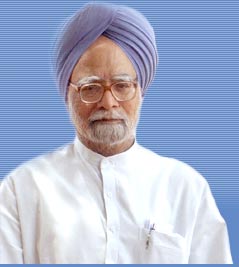
Singh comes up with unexpected revival plan for Western Economies: India will help revitalise NAM!

In its best times, Non-Aligned movement was a movement of pygmy have-nots flaunting their non-existent triceps to the global giants from the pavement while gawking and window shopping all the time.

Now, the prime minister says India will 'help' to revive the NAM. Singh has a sense of humour though, his statement clearly states that NAM is a moral high horse which India thinks it is no longer a part of (having ascended other horses meanwhile, I suppose). He says, 'India will play its part in helping NAM to regain its moral high ground'.

And why do we need to do that? says our prathan manthri who as the current biggest nuclear client is enjoying the hospitality of one of the vendor countries.

He says that NAM will now, '...address issues which are of direct concern and relevance to developing countries such as
- sustainable development (for which we demand 'technology transfer' forever),
- climate change (for which we demand 'technology transfer' again),
- food security (for which we demand food imports, suck up to technologies and seek loans),
- energy security (for which we will sign nuclear deals and seek more technology transfer),
- terrorism (which we get exported to us without asking for it any way and buy arms to counter) and reform of the architecture of international governance (whatever that means),” anything else left that can be 'non-aligned'?

Each of these issues and the way we address them will turn to the same vendors forever. Won't be surprised if Singh is very soon given grand honour by the western nations for coming up with such unexpected revival plans for their economies.

Saturday, April 18, 2009

Choice for the Left and the future of N-Deal!?

What is preferable - on the 'right' of America or a 'right' India?  This seems to be the CPI-M dilemma. Never given to project their own leaders as leader for the nation, they have unnecessarily created the 3rd front that will scatter votes, make even more regional, small sectarian, narrow minded political entities feel important and may eventually contribute towards a post-poll situation which would be no different from the last few times.

In a loud and self-righteous media environment, no one has posed this question to the Left yet, what is preferable for them, what is their choice. Karat and his team need to spell out whether they will side with BJP to ensure the end of the Nuclear Deal or will they go back to the old Congress in a post-poll situation giving up the Nuclear issue forever? Can they demand a different face to lead a Congress Government? Can they get the N-deal re-examined? Or will they wait and watch the group they put together be weaned through 'negotiations' in a post-poll situation by either of the two main parties while they hold their moral high and sit in the opposition for another 5 years by when the public would have forgotten the N-deal and anyway we will be too far into it to pull out?? the BJP has promised a 're-examination' of the N-Deal, whatever that means, but, would the Left side with them and provide outside support?

Sunday, March 22, 2009

Nuclear Deal and Elections 2009: The CPIM position

The CPI-M was the most articulate party opposing the Indi-US Nuclear Deal in 2007. At that time I had put together a series of posts on the Deal and its consequences (link), and even thought that the clarity of the commies was exemplary leadership (link).


However, their 2009 Election manifesto is damp squib on the Nuclear Deal. In a scenario description part (Section I of their document) on the state of affairs today that runs to 13 pages, the Nuclear Deal is in page 8 as a built up to explaining away their withdrawal of support to the Congress government. Even in their promises, they are moderate now, their manifesto reads, 'reviewing and reworking of 123 agreement...', the kind of statement that was used by BJP during the debate on the Nuclear Deal. However, having placed the communal issue on top of the Nuclear Deal in their manifesto, they cannot join hands with the BJP to do it, so, in effect, the CPIM has all but washed its hands off as the leader of anti-Nuclear Deal. Unfortunate that the political parties seem to have even lesser memory than the public. 

Saturday, December 27, 2008

A month after Mumbai, 4 years after Tsunami...differences in response

The news paper reports are today replete with people paying homage to Mumbai terror attack victims as well as  recollection and homage of those who died in the tsunami 2004.


One natural disaster that saw, in response, a resurgence of human compassion and voluntarism while the other disaster wrought by humans led astray is responded to with anger and animosity. As the year comes to an end, war on Pakistan is increasingly being spoken to as 'when' and not as 'if'. Pakistan itself seems to be under greater  belief that India will go on a war with them. 


The war is being already fought by the media.  The media in Pakistan seems to be working overtime now.  I am sure that makes better business sense, imagine Indians had terror attack and could get good TRP for a television for a week maybe, Pakistan is selling the response to terror and getting probably better TRP (or whatever is the equivalent there) for a month. 


Modern technology and economic organization that provided Kasav and his people with easy access to guns, grenades, global phones and positioning systems has also provided the media in both countries with information on weapon capabilities, about the N processes, about the preparedness for attack, minutes for response, about weapons and their uses...the amount of knowledge we possess on instruments of violence seems endless. 


Many Indians feel that we should show that we too, 'know' how to use these tools of violence, Pakistanis feel that they should show their superior 'knowledge' on the tools of violence, while fanatics on both sides tease each other about each others' ability to use such 'knowledge'.


If the sense of security of a nation comes out of its knowledge of violent tools and methods, it must be a extremely violent society to begin with. I don't think our knowledge (and possession)  of tools of violence provides us with the sense of security.  If the response to the Mumbai attack results in us getting increasingly aggressive in acquiring, possessing and exhibiting (using) tools of mass violence, then we only perpetuate the violence, not work against it. Response to human pain cannot be in causing more human pain, response to the sense of hurt in a nation's pride cannot be solved by hurting another nation's pride. We did not win our Independence by hurting the pride of the colonials. They did not become our 'enemies' despite causing greater damage to us and killing more people for longer duration. 


I don't think India is a violent nation, it does not come to us naturally to be violent. Violent people are not majority in this country, violence does not stay in power too long either. Our tendency is to gravitate towards peaceful existence, and what we tend to, is our true stable nature, our own character.  This is defined by the traditions we have built and the leaders we have come to revere. However, we don't seem to have created either pride in this character or suitable methods of applying it in all situations. Gandhi successfully applied it against the Colonials, and since then it has surfaced once in awhile in different policies almost inadvertently.


As the year draws to the end, the image of the Mumbai attack will overshadow all other images and moments for most of us. The response to this attack on the nation's pride could unite us as a nation. We could be united  as a mob, faceless, identity-less, lynching an unequal but protesting and fighting 'enemy' or we could be united with an understanding of our true character that bring in spontaneous bonding and could make us stronger. Such understanding was seen after the tsunami, in the way many Indians bonded and worked together with complete strangers, in an understanding of compassion and peaceful co-existence. Our responses then were highly innovative, they were spontaneous and made us stronger. Our response now? 

Monday, July 21, 2008

the single killer vote!!

As we inch closer in perhaps the most publicly debated power struggle in the centre, new standards seem to be set in politics. There are reports of 100Cr being offered per M.P. to either vote for government or abstain, there was reports of someone being offered a berth in the Central cabinet and someone else a Chief Ministership, someone else has been offered a divided state. The opposition not to be out done by the government has also proposed someone as the future Prime Minister! and is trying its own tactics.
Individual MPs are suddenly so caught up in their importance of their single vote, they seem to feel more valuable (some MPs may be wondering why the hell they have only one vote, why not do what is done in municipality elections and let the powerful one cast more votes!?) and in their excited state almost forget what they are talking about. 'In the national interest' has been most heard in the last one week in our media than ever before, 'I believe the Nuclear Deal is in the national interest', 'we need the energy for our future', 'this is strategically important for us', etc. all being mouthed by people who suddenly want to mix emotions, national pride, loyalty, blind faith, meaningless morality and any other kind of sentiment to justify a policy decision that has its roots in science and technology. Even the normally sane looking Dayanidhi Maran was on television declaring his loyalty and reiterating his faith in the 'wisdom of Manmohan Singh' as the reasons for supporting the Nuclear 'Deal' (to the utter irritation of Ms. Gandhi that is what the nation calls it despite her insistence that it be called a agreement and not a deal).  I wouldn't be surprised if there will be prayers to Gods and Godesses across the country that we sign the Nuclear deal and that the government survive. The other day there were reports of Sonia Gandhi being offered laddus from Tirupathi temple for precisely this reason!!! 
Electrical energy is a function of technology, technologies for producing energy are many and some of them are clean and some cheap, some are destructive to the environment and others not too destructive. Nuclear energy (after this deal) will make us depend external players for raw material, technology, regulation, usage and maybe even trading and charges. It is high technology dependent, requires extreme precaution in terms of safety and security, needs enormous amount of resources as initial investment and maintenance, is certainly not clean or green as the government advertisements claim and could leave residues that takes many thousands of years to dissipate.
But, that is of least concern to the MPs, they are currently consumed by the single killer vote that they possess in their person. Never has every insignificant MP felt so important and so sought after. 
The visual media is loving it too, post-IPL, they have been fighting among themselves for re-re-re-re-run of Ramayana and Mahabaratha for bolstering their TRPs and here is an opportunity to squeeze a live coverage to its maximum. All kinds of meaningless debates and even more meaningless surveys seem to be conducted by the media. One of them, which I briefly watched, had a survey of Muslims across metropolitan cities as to what they feel about the deal. That is the most stupid development in the media. Why are Muslims being asked an opinion based on their religion on an issue that is about energy and technology? Will we next ask Christians about their opinion on the Iran-Pakistan pipeline, because Iran has snubbed the Christian nations? Similarly will we seek the opinion of Buddhists before we protest against Sri Lanka for killing fishermen in the Tamilnadu coast? What kind of the insensitive media can come up with divisions such as energy for Indians and energy for Muslim Indians.
This sure is the most macabre political theatre we are witnessing and the killer votes are shooting at our foundations of democracy and political life.  We all may suffer this process as long as its eventual policy outcome.

Sunday, July 20, 2008

two articles on the nuclear issue from a previous debate...

The 80s was the in-between decade. we had already had one nuclear test, we were not going to conduct any more immediately, at least the political climate was not to conduct any more tests; nuclear energy would be discussed as a possibility. 
The scientific establishment had not started to be so visible with its opinion that has happened post-IT era, it was still the bunch of scientists doing their work in pune, bangalore and other small towns, they were not the popular, powerful opinion builders that they have become since Kalam. 

The alternative to congress had failed in the late 70s, and BJP was yet to arrive in the political scene. A group of Science and Technology students and young professionals were re-discovering indigenous sciences and technologies as they re-looked at their roots with the newly acquired proficiency. There were many such groups across the country doing it in their own way with whatever resources they had. One of the most promising and intellectually powerful was the Patriotic People for Science and Technology (PPST), a group consisting of students and youth with technology degrees, primarily from the premium institution of that time, IIT. As they rediscovered the world of ordinary people, they produced a series of articles through the PPST Bulletins that were both presenting the people's knowledge in the emerging new idiom as well as challenging the dominant and mainstream thought patters. They posted some serious questions on development, technology and our understanding of society. 

Though the group neither survived in its shape beyond the decade of 80s nor could it sustain its tempo to challenge the dominant paradigm, the knowledge it produced and the arguments it made were significant and set the tone for many later day initiatives and certainly inspire people even after a couple of decades. 

Recently, we rediscovered two articles on the nuclear issue that were prevalent at that time. The arguments look significant even today and are worth a read for anyone taking a serious interest beyond the immediate political significance on the nuclear issue in particular and energy overall.

2. The Indian Nuclear Energy Programme - Net Energy Analysis, March 1989 by Ashok Kumar

Tuesday, July 15, 2008

small minds and their strategic significance in a global game...

Karl Marx, and it is ironic that I quote him now, had said about India: '...we must not forget that these idyllic village communities, inoffensive though they may appear, had always been the foundation of Oriental despotism, that they restrained the human mind within the smallest possible compass, ... enslaving it beneath traditional rules, depriving it of all grandeur and historical energies. …' (article on British Rule in India), Marx a sincere modern western thinker seems to have got it better than his contemporary followers, Com. Karat & Co.,
Ultimately it is the economic benefit from some of the industries that will benefit from the Nuclear deal (for whom this is a small change investment) and ability to settle scores in their small town rivalries will ensure that the UPA manages the adequate numbers for the global game of nuclear comeuppance. The internationally experienced PM who during this tenure 'invited' the British to India again promising a better reception that what Robert Clive & Co., got has done what RC&Co mastered best, using small time rivalries of small people to gain political mileage. It is Amar Singh Vs. all those who humiliated him, Mulayam Singh Vs. Mayawati, Ambani Vs. Ambani, Soren's image Vs. Soren's 3 MPs wanting to be ministers, Gowda's image Vs. his own greed, Telengana Vs. AP Congress wishes...as long as their small time feuds are even temporarily shown as settled, they would support any global power to set-up anything anywhere. Nuclear deal doesn't mean anything to them. 'I don't know much about it', says Amar Singh about the Nuclear deal, in one of his numerous interviews that has suddenly crowded our public space with all its podgy dramatics, I am sure Deva Gowda, Shibu Soren, Mulayam Yadav and Chandrasekhar are no better aware of it. If they can get the centre to help settle their local scores, they will go anywhere to support it to do anything. Small chieftains across India sold their local kingdoms to settle small scores with Clive's help and the rest is in our history books. As far as the PM goes, while he waits the G8 sidelines, all these people and their petty rivals are 'expandable', they can sell their souls to hell for settling their rivalry scores today and the consequences can wait while they gloat in their transient victories.

Saturday, July 12, 2008

Govt launches ad blitz to push nuke deal

Govt launches ad blitz to push nuke deal: I think this is sick! they cannot do it till the trust vote is done with in the Parliament and if this issue is one of the major election issue, then i would think such an advertisement is a built up for the elections itself. To claim as part of the advertisement that the nuclear energy is the "most efficient, environmentally cleanest and safe source of energy" is really pulling a fast one on the public.

Sunday, July 06, 2008

‘expert’ and ‘expert consultation’ on policy issues

Yesterday’s news headlines read how the Samajwadi leader Mulayam Singh had decided to support the struggling UPA government on the nuclear deal after he sought and received ‘expert’ advice from the man credited with the second nuclear bomb testing and the former President Dr. Abdul Kalam on the issue. Interestingly Amar Singh the secretary of the Samajwadi party mentioned in the press meet that Mulayam singh will decided the experts who will be consulted on this issue. Based on the news reports Kalam is the only ‘expert’ consulted.
Perhaps the role of expert in this case was notional as the SP had already decided to side with the congress on this deal and Kalam filled the convenient gap (as he did during his Presidency). But, the larger question that it throws light is on the definition of the word ‘expert’ in our public discourse and the larger perception and understanding of the need of and the purpose behind an expert consultation.
In a recent interview with Tehelka, noted thinker Ashish Nandy talks about how our political system is undermined with alien categories. Not just our political categories, but, our policies making processes too are guided by such principles.  Specifically in the areas of technology there seems to be no bigger ‘authority’ than that of an ‘expert’ in the said technology, leave aside the fact that the impact of the policy on technology is on everyone not merely on the experts alone.
So, all through the nuclear deal debate we have had anyone with a vague involvement with the scientific establishment, repeatedly consulted over media and public sphere. We assume that the will be able to give an impartial and unbiased opinion on an issue of national significance that has not as much to do with the technology as much as the national demand on the technology and what it claims to achieve.
Surely the needs of the nation and the achievements are functions beyond technology, which is only a means and not an end in itself. If the question was posed as to what are the electrical energy demands of the nation, what are its applications, how significant are these applications in the national priority, how important is it to sustain these applications, what are the levels of efficiencies in our current electrical energy utilization, are these optimized, have we managed to make the best use of them, how much do we need to pay for these electrical energy needs, etc., we may find that the questions automatically broaden the scope of engagement and the role of ‘experts’ on this issue. Much of our questions on technology policy are rather limited and often the solutions are para-phrased as questions and the questions didn’t arise in our minds till the solutions were presented to us.
A few years back, S.M. Krishna as the then Chief Minister of Karnataka had opined that anyone who did not possess a formal qualification in the field of biotechnology was not eligible to discuss the Genetic Modification issue. Time and again we see such statements being made on the role of experts by politicians willing to pursue a certain policy.
With the political structure becoming increasingly weak and the leaders having neither the courage nor the knowledge to make any decisions on their own, they seem to rely upon the bureaucrats, judiciary and technocrats to make the decisions for them. Whether such a policy would ruin their political status being their only concern, everything else seems to be of no consequence all together. Inability to tackle the increasingly vocal media and knowledgeable civil society also seems to corner them to adopt such respite. The media is just overwhelmed and civil society challenged polemically through such ‘expert’ involvement. The media is dictated by its time constraints and the civil society by their resource constraints.  
What are our definitions of expert or expertise in the sphere of public good or national importance? What are the competencies we expect from such experts? Is position of power such as judiciary or bureaucracy or association with a scientific establishment adequate for such experts? Who among these represent the ‘aam admi’ interests and the betterment of the nation?

Wednesday, June 25, 2008

would we miss this PM?


in the last few days now, no one has seen the P.M. He is supposed to be under medical care. but, has the nation missed him?

my question is not to do with the nuclear deal in which the PM seems to be more bent than any other deal. inflation, oil prices, new coastal regulation policy that no one wants, bhopal victims (whoever has the energy and is still alive) on a long hunger strike in delhi, sikkim having youth on hunger strike protesting against a unnecessary dam, prof. agarwal continuing his hunger strike in uttarkashi despite threats from local politicians, gujjar problem in rajasthan, shiv sena renewed issues in maharashtra, the continuing farmer suicide...much else happens in the country. but, the PM is stuck on the nuclear deal. one day he says, 'take it or I quit', next day he seems to say, 'take it or I will not go to G7', who will miss you? we don't miss you certainly.

MM Singh has forever been media darling because of his demenear, so much so that we have forgotten that he probably is the weakest PM we have ever got in this country. not even during the short stints of Gujral and Gowda would have been as weak as now. He has no respect in his party, certainly no power. His party leader to save the government, consults Balu, a minister who admits to being corrupt in the floor of the Parliament; his cabinet colleagues openly fight each other through press statements, he doesn't hail from anywhere nor does he have a following except among his own category of babus in global babu institutions such as World Bank and UN and local bureaucracy. He was never elected through an election that was actually fought. He is 'clean' from the taint of the Indian politics and the only people who celebrate him are the middle class whose general knowledge is fed by the English visual media and who in turn feed it with their half baked opinions.

his carefully spoken English is a darling of those masses who have learnt their English in English medium schools so that they can go abroad and 'make a lot of money', his greatest achievement has been that he ushered in those changes that would have been brought in by any one, because there was no choice but to liberalize. his greatest beneficiaries - the corporates laughed at his face when he suggested voluntary cuts in pay scale and all but booed him for suggesting reservation in their ranks.

MM Singh is a rank outsider in the congress. he is part of a long list of bureaucrats turned politicians of the 80s and 90s that is a trend in Indian politics. it includes the popular presidents such as K.R. Narayan and Kalam and quite a few ministers including Yashwant Sinha, Mani Iyer, etc. This entire bunch of people had their 'international' reputations to back them up and no popular support among people either through mandate or through their work. Kalam became popular post-Pokhran because the media wanted a popular persona and he with his mane was much better candidate than a pug-faced Vajpayee or a simpler Chidambaram, the other key scientist involved in the process. Apart from him, none of the other bureaucrat politicians have any people backing of their own or any experience in gauging popular issues. They are bureaucrats and they all arrived in the political scene with international exposure just around the time India was opening up to the world(or was it because these people arrived in politics that India opened up to the world?).

his entire career has been in 'opening up' india for financial investments by others at a time when international investments paid little returns in america and europe and people are looking to invest in better parts of the world for better returns and china is still looked at with suspicion. china is no longer looked at with suspicion, the investment there is much higher than us, but, that is a different issue. the issue is if he didn't propel this opening up would someone else have done it? of course, it would have happened, global capital lords would need a different place for better returns and India would have to be opened up in any case. MM Singh and later date Chidambaram are the right people in the right time with the right attitude. they cannot be attributed with any great vision, neither have any. they can be given credit for pushing the global investment agenda through arguments and presentations within the cabinet and ensure that this is never vetoed, they have managed quite well. for this, the media created them to be heroes, they have enjoyed the image and benefited from that too.

his current nuclear deal obsession defies all previous thick headedness by any PM before. it looks like the most beneficial effect would be for corporates that specialize on the nuclear technology, both for military and for civilian purposes. when globally there has been a renewed look on energy afresh and USA doesn't mind even causing global food crisis by diverting its food crops to fuel crops, here we are stuck with obsolete technologies such as coal and large dams on one side and dangerous and white horse technologies such as the nuclear ones to peddle our energy cycle.

we don't really even understand our energy needs. every votary of the nuclear deal has forever recycled the consumption needs of energy 20 years from now, where are these projections from? what is the level of consumption that is anticipated in this kind of consumption? who are the beneficiaries? none seems to bother and none of these questions are posed anyway. economists need to reduce humans to numbers so that they get back to their comfort zone of calculations.

clinton has recently reported to have commented that India and China will burn down the earth. true if the 'american way of life' wins in both these nations today. both the countries have increased their ability to consume and they are consuming at a rate not seen earlier, traditional forms of restrain is no longer valid as (atleast in India) reforms have come about in religious and cultural institutions which synonymously connote abundance with greedy consumption. across the country american way of life has come to be justified by data of how we had materials in abundance 200 years back! this is perverse reading of history too.

Tuesday, April 29, 2008

India preparing for a war in the next 10 years: Business for US Corporates from Indo-US Nuclear Deal


In my last post on this issue several months back, I had reproduced how much the American Nuclear supply companies stood to gain from this deal. Well, among others, our security analyst Raghavan (whom I had quoted in my last post) too got it wrong. The Nuclear Deal and the arms supply to India is seemingly poised for a major jump. Indeed the kind of investment seem to imply that we want to go for a war in the next decade or so.

Here are excerpts from a blog post from someone who maybe thinks all this is great news - Indians in the USA who stand to benefit from the deal through their careers/ companies. India is to become a major centre of weapons in the coming decade is the clear message. Much of the so called FDI that is being invested in India is to be utilized by the revenue being generated more efficiently by Chidambaram & Co., for buying weapons of mass destruction (WMD) from a country that has been obsessed with that idea for a long time now.

Business and Indo-US deal

Power Plays: Business Implications of the Indo-U.S. Nuclear Deal

From: India Knowledge@Wharton Article , Aug 09, 2007 http://knowledge.wharton.upenn.edu/india/india/article.cfm?articleid=4217


Two big U.S. delegations -- representing 180 companies and 38 companies respectively -- visited India in the past year, looking to sell items such as Westinghouse nuclear reactors, uranium from South Dakota and Lockheed Martin fighter jets.
...Still, political groups in both countries threaten to block the deal, even as the emerging geopolitical realities and the economic benefits appear to outweigh the concerns. India Knowledge@Wharton spoke to corporate executives, analysts and Wharton faculty members to understand the business ramifications of the deal.

Staying Below the Radar
Initially, it appeared that most of the debates about the U.S.-India nuclear agreement were largely political. A deafening silence marked the business implications -- and with good reason: Many senior executives were waiting for the political clouds to clear and for the final terms of the agreement to be revealed. As GE India's CEO T.P. Chopra told India Knowledge@Wharton in an interview, the final form of the agreement would affect GE's nuclear power strategy in the country. Some business leaders point to other challenges. "First, some hurdles still remain," says the CEO of an Indian company that has been negotiating with U.S. firms for defense joint ventures. "The last thing we want is to give ammunition to the Left-wing parties. They would love to project the U.S. as greedy capitalists selling the country for a few dollars more. Business will keep silent until it's all signed, sealed and delivered." (The Congress Party-led Indian government depends on support from the Left, which has rejected the deal.)
...
According to an ...News report, "Areva, the world's largest maker of nuclear power stations, and General Electric, are among four companies poised to share $14 billion of orders from India as nations led by the U.S. prepare to lift a 33-year ban. Toshiba's Westinghouse Electric and Russia's atomic energy agency Rosatom will probably also win contracts to each build two 1,000 megawatt reactors, according to Nuclear Power Corp. of India chairman S.K. Jain." The report noted India can begin purchasing equipment following NSG approval of the agreement.

....(the report) added that "the orders will form the first phase of Prime Minister Manmohan Singh's plan to build 40,000 megawatts of nuclear capacity by 2020, equivalent to a third of current generation. India needs to add to the 3% of electricity that comes from Russian-designed reactors to meet soaring energy needs and reduce its reliance on coal-fired power plants." The report also quoted one source who said India would "try to diversify its suppliers and it's highly likely all four [Areva, GE, Westinghouse and Rosatom] will win the contracts."
...
For U.S. companies, multi-billion dollar opportunities are opening up. "It is not just in the nuclear area," says Shivanand Kanavi, a commentator on technology issues who is currently writing a book on India's nuclear program and is the author of Sand to Silicon, a book on the digital revolution. "There are opportunities at several levels and in several sectors."

One obvious opportunity is that U.S. companies will be allowed to sell both nuclear reactors and technology to India. This is big business -- roughly $150 billion worth, according to estimates from the U.S.-India Business Council (USIBC). The numbers are extrapolated from the Indian nuclear industry's plans to increase nuclear power output from around 3,500 MW now to 60,000 MW over the next three decades. The Atomic Energy Commission has doubled its target for 2024 from 20,000 MW to 40,000 MW. Nuclear energy today accounts for barely 3% of India's total generation of 120,000 MW.

A clear beneficiary of the new regime is the public-sector Nuclear Power Corporation of India (NPCIL) -- the entity negotiating the deals with Areva, GE, Westinghouse and Rosatom cited in the Bloomberg report.
...
Regulatory Bottlenecks
At the recent annual general meeting of Tata Power, the group's chairman, Ratan Tata, told shareholders: "If the government opens the sector for private investment, Tata Power would be certainly interested in operating a nuclear power plant." A critical challenge for businesses, however, will be securing the government's green light. Today, only companies with a 51% government stake are allowed to generate nuclear energy. In practice, this has boiled down to only NPCIL. Two years ago, the 89.5% government-owned National Thermal Power Corporation (NTPC) had approached NPCIL with a proposal that it enter the nuclear generation arena. But the talks have not made much headway. (Incidentally, NTPC shares rose on the release of the text of the 123 Agreement; NPCIL is not listed.)

For the private sector to enter the fray, the regulatory environment will need to change. In May, Atomic Energy Commission chairman Anil Kakodkar told a meeting in Kolkata (formerly Calcutta) that the Atomic Energy Act would be amended as soon as possible to allow private-sector participation. Draft legislation has already been circulated.

...Over the years that the Indian nuclear industry was shunned by the Western world, many of these companies have built up a good deal of expertise. HCC, for instance, was the first Indian construction company to undertake civil engineering works for pressurized heavy water reactor power projects in India. "HCC has constructed four out of the seven nuclear power plants in India," says chairman and managing director Ajit Gulabchand. Four new plants are under construction, with HCC building two of them.

"It is fast becoming accepted that nuclear energy is 'green' compared to conventional energy sources, and it is also quicker to implement," says Gulabchand. "There is a renewed global focus on building new capacities."

M.V. Kotwal, who heads the heavy engineering division of engineering giant L&T, now sees openings to set up "light water nuclear reactors of the boiling water type or the pressurized water type." He says the technology for such reactors, which need enriched uranium as fuel, is available with the U.S., France, Japan and Russia. Whereas L&T is equipped to manufacture the main reactor vessels as well as steam generators, pressurizers and other critical equipment for such nuclear power plants, "it is a problem at times to source some of the raw material which is manufactured by European, Japanese and Russian companies," says Kotwal. "After the clearance of the agreement, it will be easier to source such material and hence to speed up the Indian program."

...Meanwhile, the perestroika in the nuclear arena will extend to exploration. The public-sector Uranium Corporation of India will be bidding for mines abroad. Meanwhile, at home, the private sector is being allowed into uranium exploration. For starters, the Department of Atomic Energy (DAE) will outsource areas like data collection and analysis.

All of this is, however, small change compared to defense deals, which have U.S. companies waiting anxiously. A conservative estimate says that India will spend $70 billion in defense procurement over the next five years. (The $150 billion estimated for nuclear power projects is spread over 28 years.)

Take just one component: fighter jets. India is in the market for 126 multi-role combat aircraft. At $10 billion, this is one of the world's biggest single-supplier contracts.

... Boeing's recent win of a $11 billion order for 68 aircraft from Air India, and its announcement that it would invest $1.7 billion to buy goods and services from Indian companies. Lockheed Martin has approached Hindustan Aeronautics, Bharat Electronics, BHEL, and the Tatas for joint defense projects, he adds.

Today, Russia is India's biggest defense supplier. Israel stands at No. 2, having overtaken France, the U.K. and the U.S., who had been hamstrung by various restrictions but now want part of the action. India this year expects to spend $10.5 billion on military equipment, including $4 billion for the air force, $2.8 billion for the army and $2.5 billion for the navy. Some 70% of those capital needs are met though imports....

"Ultimately, economics determines everything," says Chaudhuri, who feels those compulsions will override political opposition to the deal. To support that point, he says that despite widespread criticism of China's political system and its human rights issues, the U.S. business community is "very close to China."
source:http://reflections-shivanand.blogspot.com/2008/04/business-and-indo-us-deal.html

Friday, October 26, 2007

More on the Indo-US Deal


I had earlier promised not to post further on this issue. But, it does not seem to leave us at all. The Americans want it, the PM is willing to sacrifice the government at one time and only his chair at other time for it (nothing is clear and neither seems to be happening, poor Deva Gowda). The Congress wants it, now, BJP too seems to want it (so if there is a chance of them coming back, it would come up again) and the US Ambassdor is talking to them too. Only the Communists are between the deal and the Nation, bless them for that. Here is one more news item that calculates the economics of the deal -

American Interest in Nuclear Deal by B.S.Raghavan in Business Line

...India’s plans of installing 40,000 MWs of nuclear power in the next 20-30 years, it is clear that the nuclear deal will mean a business of $80 billion for the lucky ones who win the contract. Allowing for the price escalation in later years, the figure may even exceed $100 billion, enough to inject adrenalin into the economy of the countries in which the supplier firms are located.

Remember, this does not take account of the requirements of components and spares, financing of service and maintenance and royalties on technologies — all of which may assure a steady flow of $10-20 billion more for the supplier firms during the life-time of the reactors. Certainly not a prospect to be sneezed at. As regards the intangible benefits to the US, an article “America’s Strategic Opportunity with India” by Mr R. Nicholas Burns, US Under-Secretary of State for Political Affairs and the point man for all that concerns the nuclear deal, published in the November-December issue of Foreign Affairs, gives an authentic exposition.

First and foremost, the deal is calculated to serve the national security interests of the US by bringing India into the international nuclear non-proliferation mainstream; second, it “will not assist the country’s nuclear weapons program in any way”; third, it gives the US control over the newly-to-be-built facility to reprocess spent fuel as it can operate only as per the specific arrangements and procedures laid down by the US; fourth, “should India decide to conduct a nuclear test in the future, then the US would have the right under US law to seek the return of all nuclear fuel and technology shipped by US firms”; and, finally, “an increasingly powerful India represents a singularly positive opportunity to advance (the US) global interests”.

Why would the US not pitch for it?

Thursday, October 25, 2007

Moving beyond Nuclear Power

Prayas is a Pune based group that has been talking about energy in India seriously. Wanted to bring to notice their write-up on the Nuclear Power issue.
...If there’s real concern about energy security, then far more important areas need urgent attention. Coal provides more than 70% of India’s electricity. Yet, only 45% of the potential coal bearing area has been systematically explored, and knowledge of our coal reserves is abysmal. Productivity in our coal mines is only 7-10% of that in American and Australian mines. Yet, we are slow in adopting new technologies, resulting in poor coal quality and yield, and higher costs and emissions. More efficient use of coal, particularly in power generation, would pay handsome dividends towards energy security. But there is no strategic programme to assess, develop and deploy emerging technologies even as privatization is being promoted as a panacea....

...The most painful is the callous disregard for the energy needs of the poor. Nearly 65% people still use conventional, non-commercial fuels such as wood and dung for cooking. With a severe shortage of these fuels, the rural poor —especially women—spend hours every day collecting cooking fuel. A World Health Organization study indicates that nearly 500,000 people die every year in India due to indoor air pollution, largely a result of inappropriate burning of wood and dung for cooking. Thus, cooking fuel poses the real energy crisis for a majority. It is ironic that the focus is on India acting responsibly to protect the global environment and address the problems caused by developed nations, not on the environmental crisis at home.
http://www.livemint.com/2007/10/23221235/Moving-beyond-nuclear-power.html

Wednesday, October 10, 2007

The Indo-US Nuclear Deal: A Time in History where things could have gone the other way...

Maybe my last post on this issue. Just to summarize and also share some of the things I have been reading. I had thought that the conclusion on this deal was foregone (My posting in late August which has since then come true). But, there are disturbing trends that need to be understood by all of us in India.

1. The 'we don't care' attitude of the Congress Party on this issue needs to be noted. There is little that has changed since August when the Left first came up with objections to the deal, which means, the new found arrogance in the congress leadership must stem from something else. Could it be that they have found out that in the case of an election, they stand a chance to win without much ado? I am sure intelligence agencies and back room technical boys in the Congress are capable of doing a month long job to come up with such conclusion, the time gap for the change in the Congress posture seems to be just right.

But, perhaps there are other reasons too. The recent issue of Tehelka carries an interesting news item, 'Young Brigade Goes Nuclear' which talks about the new bunch of young Congress leaders owning up the Nuclear Deal . Though the article carries interview with only one of the leaders named, if this is to be taken at face value, it is bad news. The Nuclear Deal somehow seems to have become associated with the 'paradigm shift' in the Congress. Nothing is more stupid than a young bunch of new comers talking of paradigm shift owning up to a deal that provides many opportunities for jingoism and showmanship. More importantly in this article, the Chairperson of Congress Future Challenge Committee is talking about 'creating a new USP' for the party! Nuclear Deal is the new USP for the old Congress! (USP for the uninitiated is a marketing term that means Unique Selling Proposition, used to promote the one feature in any product that needs to be communicated to the customer as being unique and ahead of the competitor, it is often a publicity gimmick as the fundamental product can only change itself in so many ways). Corporations provide for such flexibilities, a national government that is already fractured in its inheritance cannot. Certainly not a party that is responsible for much of the fracturing.

2. I am still to come across anyone of our nuclear deal promoters who thinks of this as a complete, cost-effective or clean solution. The entire debate has been dominated by scientists-technocrats who have an undying fascination for trying out latest technical possibilities and bureaucrats who are chest thumping about how this is a great deal that they have brokered, leave alone the fact that USofA does not get pushed by a piddly platoon of IAS officer from India. Obviously, the safety of the technology and the nitty-gritties of the deal have covered more print space than the priority and ethics of the deal.

I have been trying to understand the larger issues related to nuclear energy, if indeed energy is our problem for which we think this is the only solution as some of our eminent scientists want us to believe. (My earlier post on the on-line references) It was good to note that the Communist leaders too seem to be doing their homework on this issue to some extent (my posting on Sitaram Yechuri's article). Personally for me, an eye opener was reading the book, 'The Nuclear Barons' by Peter Pringle & James Spigelman. This book is a must read for anyone wanting to understand as the authors put in the sub-title, 'how (the nuclear barons) created our nuclear nightmare'. How the entire nuclear research, bomb and technology has been developed through scientific ambition, often mis-placed political ideas by technologists, political jingoism and commercial greed. Though this publication is two and half decades old, its gripping narration style and factual presentation makes it invaluable in understanding the evolution of the nuclear technology. I would like to quote a small portion from the Epilogue of the book that is worth reading:

' the core of the proliferation problem is the expansion of nuclear-generated electricity: more nuclear power plants mean more fissile material available for diversion into bomb projects. There is no way of preventing this at present: the nuclear materials market is too large and too diverse to be controlled through export sanctions and the current early-warning system of a diversion of nuclear material, known as safeguards, is inherently ineffective.

Even withouth the link to nuclear profileration, nuclear power carries dangers of a magnitude that we ought not to accept. There is something profoundly stupid about continuing to multiply a series of engineering marvels that fifteen billion curies of radiation. We do not know enough about radiation and cannot be sure enough of our technical prowess to allow this system to dominate our energy supply. Morever, the instinctive human fear of radioactivity is not irrational, as the nuclear advocates assert; it is also so universal and so enduring that it is a political fact of life.

...The problem as the entire nuclear history illustrates only too forcefully, is that we have never been able to devise human institutions dedicated to minimizing their own activities. We must continue, therefore, to treat the claims of those in charge of the nuclear complex with suspicion; by their past actions they have not earned our trust or our confidence. Their almost compulsive sense of self-importance has been given a serious blow by the strength of the citizen reaction...but it has not been defeated. Those who want to expand nuclear power continue to repeat the old refrain that we have no choice, yet, that has always been wrong and it is wrong today.

The nuclear story so far has been about a scientific and technological revolution that transformed a yarning to understand and control the powers of nature from fiction to fact. It was a stunning achievement of many clever men. What is in question now is not their cleverness but their wisdom.'
3. US of A must be the biggest arms supplier to the world. It has been investing in arms in different parts of the world where it reaps a rich harvest of war in subsequent decades. I see the entire facilitation of the nuclear technological growth in the Sub-Continent as a way of investing in this region, so that in a couple of decades a successor of G.W.Bush may launch another armed search for WMD in India and a war would be justified. Indian government will buy the technology now, buy delivery mechanisms through back door deals later and will be held accountable for the same much later, perhaps politically isolated (not unlike Iraq after Desert Storm), and later invaded and destroyed. This would ensure that the commercial interest of the arms manufacturers in the US is taken care of for the next few decades, not to talk of the Haliburtons to re-build the country after its destruction. This may sound far fetched right now for us in India, but, history with other regional powers since the WWII cannot be denied. If further proof is necessary, then it is provided by Prof. Chomsky in his article on Indo-US Nuclear Deal:
The Indo-US deal mixes military and commercial motives. Nuclear weapons specialist Gary Milhollin noted Secretary of State Condoleezza Rice's testimony to Congress that the agreement was "crafted with the private sector firmly in mind," particularly aircraft and reactors and, Milhollin stresses, military aircraft.
(Source: US/Indo Nuclear Agreement: Derailing A Deal, By Noam Chomsky, 08 August, 2007, The Khaleej Times)
4. The mix of young leadership wanting to make a 'paradigm shift' in the ruling party utilizing terms and models of the market, the eagerness of our technocrats and bureaucrats to move the country into another 'club' where there doesn't seem to be a non-destructive precedence and where the partner / promoter nation has clearly stated that they are looking at their own strategic and commercial gains from the entire deal, sounds like being in the middle of a political environment where an expression of the concerns is a statement of helplessness.

We as a nation have placed capacity to produce WMD at such a high level, that a government doesn't mind being pulled down in the process, this has never been done by any government before for any other cause including production of food grains. This moment in the political history can be seen as a point of departure towards accepting the role of a nuclear bully, capable of producing WMD at a speed if it so desires. The role and the script is not ours, nor the raw materials and technologies, but, our political eagerness to perform this role of a nuclear bully will bring in a major shift in our dealing with the world from now on. Time to recall what an old man said 6 decades back:
(Non-Violence) is the only thing the atom bomb cannot destroy. I did not move a muscle when I first heard that the atom bomb had wiped out Hiroshima. On the contrary, I said to myself, ‘Unless now the world adopts non-violence, it will spell certain suicide for mankind.’ - M. K. Gandhi, talk with a British Journalist, Sept 1946

Wednesday, September 05, 2007

More on Indo-US Nuclear Deal"

With the government agreeing to the commie demand and set-up some commission, here is something I read online that was rather neat, from one of the Communist leaders. As a non-television watcher I might of missed Sitaram Yechuri, a regular in televisions I know, but, in this online posting he sounds acceptable:

In 2006, 3.9 gw of nuclear power was generated, 3 per cent of India's total power generation. In the most optimistic scenario, after the operationalisation of this deal, this would grow, at best, to 20 gw by 2016, or just over 6 per cent of the projected generation.
Further, is nuclear power cost-effective? On the contrary, it is the most expensive option. As compared to coal, it would be one-and-a-half times more expensive. Compared with gas, it is twice as expensive. So is the case with hydro-electricity.

Given the abundance of coal reserves in India, the Planning Commission estimates that thermal energy would dominate power generation in India. As far as hydro-electricity is concerned, given the potential of nearly 150 gw, only 33 gw has been installed as of 2006. In addition, over 55,000 MW could be imported from Nepal and Bhutan. The tapping of such huge hydro-potential will not only augment our energy capacities at half the cost of nuclear energy, but will also tame these rivers, which regularly consume the lives of thousands. This year's floods according to the United Nations, are 'unprecedented' in human memory.
Thus, the government's argument that the Indo-US nuclear deal is to augment our energy resources sounds untenable. Huge commercial orders running into thousands of crores of rupees for the purchase of nuclear reactors would be placed on the US. The profit bonanza to multinational corporations is there for all to see with the attendant benefits to sections of corporate India.
Recollect that for more than three decades the West has not installed new nuclear power reactors. Is India then actually going in for this deal to bolster US economic interests? If the same amount of resources were to be spent on generating power through hydro, thermal, gas, clean non-renewable and solar electricity, India's energy augmentation would be many times higher. Thus, the nuclear deal not only exposes India to greater
vulnerability, it drains a huge amount of our scarce resources.

Apart from drawing India into the US strategic military alliances in the region like the forthcoming joint military exercises with the US, Japan, Australia and Singapore, and the effort at pressurising India's foreign
policy positions, this deal does not even guarantee full and complete access to civilian nuclear technology as assured by the Prime Minister in the Rajya Sabha. In fact, the 123 agreement forbids the transfer of dual-use
technologies. The assurances of uninterrupted fuel supplies also break down if the 123 agreement is terminated. The 123 itself explicitly states that the national laws will prevail upon termination, meaning, the Hyde Act. India would be subjected to international safeguards in perpetuity even after the 123 is terminated.


That is sound stuff and quite a few sensible questions that deserve to be answered. Thought I am not a great fan of the Commie politicians (or for that matter any politicians), I cannot but agree to his questions, particularly on the energy capacity issue.

Something else that bothers me is why are we only getting opinions from Nuclear scientists, politicians and career bureaucrats on this deal? I saw splashed across newspapers the other day a lecture by M.R.Srinivasan, distinguished scientist no doubt, but, a nuclear scientist and certainly a stake holder in the developments afoot. Why should we not have the someone from the Vidharba Farmers Association talk on the Nuclear Deal or for that matter those who have been displaced by the various dams for hydro power in this country or even those who live close to the existing nuclear stations? A colleague of the Indian Ambassdor in the US, (this man deserves to be respected for being candid about his views in public at least once in his career) defends him in the news paper, a series of nuclear scientists write on the deal, even Kalam makes a comment...why is our public discourse cornered and opinions made on behalf of a billion people by a select few, there are fewer of these than who sit in the Parliament.

Friday, August 24, 2007

Understanding Nuclear Energy and Weapons

Further Reading on the Nuclear Energy Issue:
1. 'Say No to US-Indo Nuclear Deal', 'this weakens the global resolve on NPT and sets a bad precedence for other countries' - http://www.wagingpeace.org/articles/2006/04/26_krieger_granoff_no-us-india.htm
2. An Australian point of view, 'it is all about US, Japan, Australia trying to rope in India so as to contain China, this entire deal is a strategy for the US against China and for India, an acceptance as a significant player in global politics' - http://pajamasmedia.com/2007/08/india_as_a_great_nuclear_power.php
3. Weapons of Mass Destruction (where are Nuclear Weapons across the World), trust Greenpeace to come up something as innovative as this - http://archive.greenpeace.org/wmd/
4. Nuclear Waste – A global problem with only one answer: Stop producing it!, How Market is rigged in favour of Nuclear Subsidies - both articles in the website, no2nuclearpower.org
5. A Background Paper on why Nuclear Energy is not the Solution for the future - http://archive.greenpeace.org/comms/no.nukes/nenstcc.html
6. Nuclear Power - not worth the risk, based on the UK experience - http://www.cnduk.org/pages/campaign/npwr.html
7. A Passionate Pleading by Toshiyuki Toyoda, a nuclear physicist -No to nuclear energy, http://www.thebulletin.org/columns/toshiyuki-toyoda/20070212.html

The Voice of (some) People on Nuclear Deal...

Hot Press...just now got to see this Rediff Article by Sandeep Pandey, Medha Patkar and Aruna Roy (read full story at http://in.rediff.com/news/2007/aug/23guest1.htm)

...The deal is part of a successful attempt by the United States to build a strategic relationship with India, in confronting the rising capitalist challenge from China where India will be used as its client in the region. Directly or indirectly, the US will also enter the Indian subcontinent, to manage intra-regional, inter-country relations. This whole process is likely to escalate the arms race between Pakistan and India, sabotaging the India-Pakistan peace process. How can we ignore that fact the US sells arms to both India and Pakistan? and I add, how can you ignore the fact that unless India were to enter into such an exclusive relationship, how can Pakistan be cajoled to enter into one too and thereby ensure continuous market for nuclear based technology in the sub-continent for the USA.

The agreement also facilitates a full-fledged international exchange of nuclear fuel and technology with insufficient caution and control. There will no doubt be a corporate rush to extract, export and misuse nuclear fuel and technology, and it will be very difficult to prevent misuse even for the arms trade. Highly superficial clauses don't instill any confidence against such a possibility.

However, our basic objections to this deal stem from our opposition to the production and use of both nuclear weapons and nuclear energy. The irreversible dangers of radioactivity and its ongoing impact on health, water, and the environment are factors that are being summarily dismissed in an irresponsible manner. The whole cycle of nuclear production beginning with uranium mining, is fraught with catastrophic dangers, and as a nation we cannot use the decisions of another country as justification for our own. Places like Jaduguda in Jharkhand, Kota and Pokhran in Rajasthan, have already demonstrated the ongoing dangers of nuclear use to the common citizen.

We, in India, have inherited rich renewable sources of energy, which are environmentally benign and abundantly available. The solar, wind, and ocean waves along with human power need to be fully tapped and put to use with people's control. Appropriate technology, research and development for production of cheaper equipment and tools, need to be combined with just distribution, for the right priorities. There is no political will for this in the ruling establishment. Estimates show that India can generate far more energy through alternative, environmentally sound sources. The nuclear energy option should be put up for widespread public debate giving citizens a full opportunity to make an informed choice.

This deal, however, raises questions beyond nuclear energy, opening up large spaces for US government and corporate control in India. This, no doubt, is a symbol of imperialism already demonstrated through the Iraq war and the obvious links of US policy with corporate control over resources. With unbound exchange of information, data and material, knowledge and technology the dominant global power is all set to encroach upon Indian reserves and impinge upon our sovereignty. The deal ensures supply of sufficient nuclear material to nuclear reactors in India for the next 40 years, but the precautionary agreements to negotiations and consultations are only promises for the future. All this is subject to approvals and conditions to be monitored by the US Congress, while sidelining Indian Parliament....

Ditto. Though I have little doubt about demanding tall order such as amending constitution. my earlier blog posting...

Sunday, August 19, 2007

Politics of possessing arms

To me the entire nuclear deal with the US of A looks rather uninteresting and I have not bothered to follow the news stories. But, few amusing things that I observed which I wanted to share:
1. The entire deal seems to be about India'a ability to produce nuclear arms, or to put it in Bush lingo, Weapons of Mass Destruction (WMD) and the American need to control Indian ability to create these WMD
2. America is willing to share some knowledge or skill or whatever if India will tell them what it does with the raw material that it used to make WMD. The American policy seems to say that 'as long as we know what you are doing, its fine with us'. What about the WMD of America, would they in return inform India what they do with their raw material or for that matter any other country? Seems rather unlikely.
3. Now there is a news that Australia who is one of the suppliers of the raw material with which we can make arms, wants to compel India to sign-up with America for them to supply us. In this day of free market economy, it looks childish. Australia should be happy to sell their raw material to whomsoever is willing to pay the highest price, what is their business what is done with these materials and how are the WMD to be deployed. Do they insist on such deals with all those people they supply stuff. In return can India too can ask Australia what the hell goes into the strange shining red un-edible thing the export to us in the name of Apple? Why not?
4. Our own political fight to me looks even more funny, the Commies want the ability to test shoot weapons, like the hero in old movies, they can once in a while target practice the WMD without being inspected by Uncle Sam. Some representative of Uncle Sam says, 'no go' for this, don't understand what is his problem. They should know that commies have never ruled India and are most unlikely to do anything on their own ever beyond street theater. And it is so harmless, after all Americans test shoot at real targets like Iraqis or Afghan mountain goats.
5. Now why would the commies be interested to WMD target practice is beyond my understanding. If it is deterrence, then against whom? Only Nepal, Bhutan, Bangladesh and Sri Lanka don't have nuclear weapons among our immediate neighbours. Bhutan is too small, Nepal are commie friends for now, Bangladesh are bengalis and hence friends of 80% of the commie leaders of India and that leaves Sri Lanka which has enough problems of its own for it to be deterred by a nuclear practice shot from India. The commie heads of India can be pre-occupied with meaningless banter endlessly.
6. What is the Congress' problem? It seems to be saying 'look we made a deal, we don't care what anyone thinks, we go ahead with', I suppose this is the PMs idea of 'inclusive growth' which is so much tom-toms these days.
7. And finally, Georgie old man, where were you all these days, we missed you. What an amusing analysis, if only Pranab and others in the Cabinet had any sense of humour they would have laughed their hearts out with his analysis. What is he supposed to have said, 'that in the US the head of the state cannot bluff so much' and, 'in China for such a deal the PM would have been shot'. That is by far the boldest reality statement on the two super powers by any politician in India today. Georgie's best since the time he (rather late in the day) admitted to being frisked on arrival at the US airport when he was a minister in the cabinet. At one stroke, he had lampooned the US President (how much Bush has bluffed in the US over the WMD among other things in the last few years is well recorded) and on the other, done a provocation on the Chinese, who have been doing a major PR as a built up for the Olympics.
8. P.S. - I think the only sad part of this entire comedy show being enacted is the non-participation of the old bunch of BJP jokers. Poor sods, they are so much caught up in self doubt these days.

Maybe my understanding is simplistic, but, I think realist. The US will prevail is foregone conclusion. Communists don't have the guts to pull the plug on the Congress, they have never had it going so good for them, they will eventually settle for some face saving formula. The congress does not care one way or the other, even if there were by-elections tomorrow, with no visible opposition, they perhaps can win with a better majority. Ultimately nuclear technology is the power and politics of possessing arms, the powerful and vulnerable want to own, possess, create, sustain as much arms as possible as they consider themselves weak without the weapons. The politicians don't understand arms, but, think it is their right to control them. Arms are no great development priority, inclusive or otherwise, nuclear arms are extremely destructive and there is no logic for nuclear energy for a poor country as the technology for it is extremely costly. We can live peacefully without both, but, we may then miss all the comedy!

Read by Label