Join this Group for Updates and Discussions on this Blog (and a few others)!

Google Groups Join
Showing posts with label corporate. Show all posts

Wednesday, September 18, 2013

Election 2014 built up - 2: the Raj of the Local goon?


the dominance of the local goon
as regional parties take over the setting of national agenda, and in turn the regional parties are dependent on smaller local players with concentrated and controllable voting blocks of few lakhs  or even thousands each, the biggest issue that many will face is the fear of the local goon. in the loot of the nation, there is a chain of command and there is a chain of terror, the biggest terror is the local goon - he (it is rarely a she) controls the local economy by threat, ensures that no commercial action takes place without his cut, ensures that no dissent of any kind happens, putting it down with absolute violence. 

collaboration of corporate greed and the local goon
this is a possibility as it is by and large happening across India already, whereby the local goon is promoted and supported by a globalized or global corporate for its greed to destroy some part of this land for its profits. the goon who is not bound to land any longer, doesn't have a problem in trading any resource for the highest global bidder

embedded press and sponsored news
more like owned press in the indian context. we know every party owns its own press and as the stakes for both sides get higher, the shrillness of the media to paint the world in 'us-white-and-them-black' colour is getting into an obsessive disorder; this is threatening the chances of survival of 'independent media' which will be an endangered species in India soon.  we have recently seen the ascend of a new form of media driven salesmanship of a leader of a region into the national mainstream, not unlike the American Presidentship. this trend may propel a new form of media clout creation where truth and search for truth will be obfuscated by the propaganda spin. 

civil society's marginalization
Anna Hazare and the Aam Aadmi Party was the best chance for a civil society to articulate its politics in India. the media didn't know what to do, Anna has the charisma and honesty, Arvind Kejriwal has the organizing skills and networking methods and he could continuously think of the box and beat the system. However, the time sought by the system was granted by these people while they could have gone for a decisive battle, in that the lacked the political wisdom to fighting to the finish, and they lost a chance. system seeks time only to re-coup, never to respond - that's a strategic lesson for those who deal with the system. 

the eventual split, media-black out and periodic cynical pieces by mainstream media personnel ensures that the civil society articulation in political space is marginalized. for a country with a large, imaginative and engaging civil society, this will be difficult, but, a combination of controlled media, obstinate bureaucracy, slow judiciary and corrupt political elements can ensure that the civil society is engaged in issues of non-politically threatening nature forever and forcibly done so.

so, whom does one vote for?
guess, i will not vote for the local goon. i find very little difference between the fundamental thinking between the current Congress and BJP. they both talk and behave similarly though they project the other as opposition. they stoop too low to seek dirt and smear on each other as they can't raise high to either bring in a different perspective or a different thinking into their work.  i do not attach much value to the secular credentials of Congress or the communal credentials of BJP. while one is trying to hide not having good leaders by projecting a one-solution-super-hero, the other has nothing to hide the lack of performance with and is using non-existent fig-leaf of imagination to hide itself. 

the kind of government we may have...
whatever kind and colour it will be, it may not behave much differently from the current one and definitely i don't see it last a full term of five years.  

Wednesday, September 11, 2013

Election 2014 built up -1...nothing to imagine!


alliances will govern the government 
While Congress will be judged based on the alliance it keeps, BJP will be judged on alliance it seeks.

Congress can't escape some alliance, they are too inter-connected, it can't rely on a few others, those who have high stakes to remain in power will desert if they sense Congress is a sinking ship; those that know Congress will need them badly will seed bigger favours.

BJP is driven by an ambitious man, who wants to be PM, they are more likely to compromise on principles for numbers (meaning votes) in seeking alliances. They would want some alliances rather bad, and those who know that will seek large bargains which BJP is in no position to reject; the party may have to retain some alliances out of loyalty to partners who have stuck around for long at the cost of some newer alliances.

strategies people (do / will / are likely to) play
Most regional parties will try and retain their stronghold at whatever cost so as to be able to drive a better bargain at the national level. those in power will do so through coercion, persuasive policies, doles and defaming and ensuring that there are cases against the opposition. Those not in power will try regular tactics, buy small pockets of votes from smaller leaders who can trade on votes, they will realign smaller parties to ensure that split votes cause their victory at least in a few seats if there is an unfavourable condition for themselves.

Congress can play the tough moral card, as it realizes morality is what it lacks completely; it could compromise all the partners who have tainted image, seek a makeover, re align with newer parties and  lose the election, but, gain moral high ground. however, this will effectively see several local splits and even desertion at the national level. eventually if it retains its cadre, it may regain power in a couple of years with more strength if it adopts such a stature, but, the people and courage to do that is not there (though Rahul Gandhi could).

BJP may play the tough card in seeking alliance, however, everyone knows that except for one carefully built image, there are not many mass leaders in the party, definitely at the national level. so for BJP to  play tough will be the most difficult situation. they may fall victim to several regional manipulations as long as it suits their quest for numbers, in these compromises for numbers now will be the seeds of seat sharing and alliance of corruption later on, eventually it will realize it can't govern any better than the Congress with such alliance.  but, it may not have the wisdom to deny such difficult alliances.

numbers will unite and split as well
The numbers of the collective may be counted as the basis to form the government, however, it would also ensure that the government can't do much as there will be people with smaller and smaller principle base and larger short term money base who will be 1-unit coalition members. it will be each on for themselves and many more will be seeking return of investments and this can only lead to more corrupt times. 

Cost of elections will go up this time, far more people are likely to seek money for their votes than ever before as there is a general feeling that every political party has money that they don't declare and there may be enough to go around for all. however, the disbursement of money may not have any relevance to who gets voted or booted, after all it is a secret process.

peace will suffer
Elections may also be violent as more and more people with better knowledge of the locality and no care or comprehension of the centre will be fighting in their own turf, several turf wars of the area will come to be played out.

 ...


Tuesday, May 06, 2008

Day for protest on GM Food

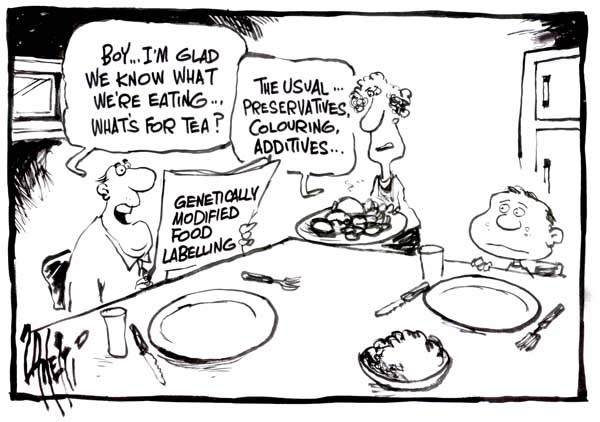
This morning the first thoughts were that later today there will be a group trying communicate to an uncaring nation about the dangers of permitting GM Food into our kitchen through a protest at New Delhi (in front of Jantar Mandir, 10 a.m.).

Genetically Modified Foods are a solution to a problem that is non-existent. Scientifically, Technically, Socially, Ethically, Economically and Environmentally it is a bad initiative. Yet it is being pursued for one single reason - it is commercially more secure for the companies who developed it. And these companies are today associated with the politically powerful nations who can dictate what ought to be done and not be done to solve global problems of both real and imaginative nature.

It is often said that the choice of 'data' is the prerogative of the person who uses it. All kinds of social, economic and political data have been used to promote this technology that has been founded on corporate greed.

Hence you find that the infestation of a certain pest (bollworm) and the consequent consumption of pesticides among the cotton farmers is a problem that ought to be addressed ONLY by inserting a gene of a bacteria on the cotton itself that will resist the pest. This is akin to saying that if you had a skin of a mountain goat you can withstand the cold in the mountains very well, so maybe humans in the mountains will need a goat's gene in their bodies, it will also save on the money people spend on the woollen. What is the issue, spending on wool? living in such tough conditions in the mountain? or reducing all solutions to the artificial transfer of the gene between species?

Suddenly, brinjals which are grown across the country in India and is cooked in a thousand different ways has become a crop in contention. Or the pesticide consumption of brinjal crop has become an issue - we are told that it too suffers from pest attacks and to resist pests, it needs to be secured through artificial bacteria gene inserted into its gene code. Similarly, across India children suffer from Vitamin-A deficiency, we are told that they urgently need supplements and what is best way to do it, of course, artificial gene transfer from a vitamin-A rich flower into whatever they eat, if their staple is rice, then we will insert it into rice, and pronto, we have the media savvy scientists proclaiming with bleeding hearts that they now have the 'Golden Rice' to save the blinding children of India.

Remember when last time a man took it upon himself to only maintain superior species in the world, we had the second world war. But, he was a stupid dictator, not a business man, when a business man wants to do the same, he doesn't waste time annihilating the not qualified, he just provides then with solutions to become better and makes money in the process. It was called fascism when a dictator does it, it is called by whatever name the business people want it to be known as now, because they are not any business people, they are the most powerful ones in the world too.

Did we not manage pests in cotton and brinjal plants without pesticides? Did we not know how to over come the problem of Vitamin-A deficiency in our children?

Across the state of Andhra Pradesh last few years farmers have proved through a process in thousands of hectares of land how without use of chemical pesticides they can manage their pests. A technique called NPM (No chemical Pest Management) that originated in the farmers' fields and till date has neither received any university or research organization's contribution to its growth! They have proved that it is possible to do pest management without pesticides very successfully. They have done this through many techniques that were developed by farmers who decided that they wanted to save on the money being spent on the chemicals unnecessarily.

Green leafy vegetables and papaya are some of the riches sources of vitamin-A in the world. There was a internationally funded project across India to promote the consumption of these by poorer communities by planting these in their neighbourhood, this project funding I am told suddenly stopped when the powerful gene-transfer agents started their bid to sell the gene-transferred rice to the Indian government. Even today this would be the easiest solution as both green leafy vegetables and papaya are available easily in most parts of the country. there are cultural issues that often limit people in consuming papaya, this can be addressed through awareness drive through the powerful visual media.

NPM, growing green leafy vegetables and similar such initiatives have on limitation. They transfer the power of the lives of the people to themselves, they make people self-sustaining and hence a threat to the global corporate agenda. The global corporate agenda today requires that life of anyone be lived in accordance with the marketing requirements of the companies. That we are aware of what are marketing requirements of different companies promoting various goods in our areas and adhere to their needs makes us a 'good' consumer citizen. If we resist, rebel or just refuse to use their goods, they we are 'not with' them. And their world view is divided simply as 'those who are with us and those who are not with us', as one of their big poster-boy neatly summarised it.

Hence the promotion of GM crops has been both presenting selective and convenient data to create a 'problem' situation that we were not aware of till it was presented thus to us and to rubbish any other 'solution' that comes from people who are not with the corporate agenda. One big beneficiary has been the media and the public relations industry, for they have been given the work of changing the perception of the world on this issue. Perhaps never before in history did a 'solution' need to be promoted with such large investment on publicity. But, never before in history did we have a 'solution' that also had to create widespread 'problems' so that it can sell itself.

As a farmer from a non-powerful nation, Indian farmers have limited choice. I was told that, Andhra Pradesh farmers this year found when they went to the shops to buy their cotton seeds that the only seeds stocked were the Bt Cotton seeds, almost in unison all the seed companies (most of them taken over or distantly owned or dictated by few global major corporates) and government seed units have ONLY stocked up Bt Cotton for selling this year. They don't have the negotiating power nor the economic might to fight this injustice. Soon, we the consumers will have even lesser choices. We will have the entire super market shelf stocked with GM Foods.

The problems that arise out of GM Food consumption is not yet fully known. Only recently one university has dared to state that a new form of disease that is spreading in parts of USA, which is inexplicable and un-curable could be possibly due to GM Food consumption. Only recently another university report states that GM Crops actually do not enhance the productivity. China has already suffered growth of giant weeds in GM fields. Environmentally, the presence of a non-natural gene-transfer across species organism affects other life forms around and disturbs the entire ecological balance, however, over stating any ecological concern today means being labelled 'eco-terrorist', a label that is most used in the GM debates to completely stonewall any further arguments on some issues.

While the PR force of the biotech majors rubbish everyone who counters them as a terrorist of one form or another, the scientists have come up with a convenient terms and explanations. So, anyone talking of a detailed testing or inconvenient data is dismissed literally at times from their jobs and as being 'un-scientific'. A new term, 'substantiative evidence' is used against 'precautionary principle' to sell the technology. In ordinary language it means, 'look we don't have adequate evidence that such and such a product could have such and such side effect, so, if you fear that it will have a unhealthy consequence and want to take precautions, that is not fair, after all there is not enough evidence, let is use it as wide spread as possible (and the corporates recover their investments) and then if there is adequate evidence (and there could be another opportunity to sell 'solution' to that 'problem') then we will see'. Of course it doesn't matter that in the process quite a bit of eco-system as we know today, agri-culture a it was practiced in many old countries and policies, people life styles and public opinions have to be modified, so what, these of are no consequence in front of the corporate greed and their power today.

We can make a difference. And the difference will start with our life style, our choice of the what we consume. Locally grown food, preferably organic and of local variety, brought through the local vendors, bought and home cooked (and not ready-to-eat off-the-shelf food) are the first small steps to stepping out of the corporate greed agenda that is GM Food. Of course, this means time taken off from our often busy schedules. This time invested by many adds up, it adds up to erode the corporate markets thereby their greed and ultimately changes their course. If we don't have that extra time to alter our food consumption habits, we may not have much choice tomorrow, it is estimated that almost 85% of the American food is GM Food, we are not that bad yet, but, it is not too far away too.

You may not take time to symapthize with those who protest against GM food crops in Delhi today, you can however choose to live healthy by simply investing that extra time for your own benefit and incidentally the world will benefit too, it is as good if not better than tax exemption for spending on yourself. It is our choice.

Wednesday, August 15, 2007

Freedom from the Bottled Water

Ninety Four years old Seetharam Iyer is one of the frequent visitors to my office, many times just to say 'hello' if he is passing by. Couple of weeks back in one of his visits, I was pouring out drinking water from the jug on to a tumbler, when he sharply said, 'enough, stop', and went on to explain, 'don't you buy this water?', 'yes', I said. So, 'it is enough to pour out as much water as is required for me, why fill up the glass every time and then the remaining water will be wasted any way, today it is all money'. A moment for stopping and pondering over for me, a learning.

We are so much used to throwing the left over water from a glass when we want to either empty it or clean-up or wash, most of us have not realized that water is no longer free, indeed it is getting costlier by the day. I often wonder why meetings, particularly, seminars and conferences are so proud of the plastic water bottle so much that they give it the most prominent place in the table. In every public meeting, on the podium or on the table in front of the dignitaries this cheap plastic bottle has come to adorn almost flaunting our ignorance as much as our indifference. I have repeatedly seen even in meetings where speakers talk of the corporate take over of water and how water is costlier than milk, etc., there is a bottled water on the dais. Do we wait for a day to ban bottled water in public like it is happening for cigarette for us to understand that the utter un-ethics of the entire water trade, but, also the magnitude of the incidental plastic garbage that is generated out of it?

Recently PepsiCo acknowledged that the 'Aqua Fina' with the mountain image was not to be taken at face value and that it is actually only selling 'tap water' in the bottle. Related News Item
A group in the US has been fighting the corporate take over for quite some time, pointing out how the per capita consumption there is 400 litres per day as against 10 litres in countries like ours. But, we are a country of 1 billion people and do not have to wait for international consultants to descend on us and teach us how to reduce plastic garbage by reducing bottled water usage. Can we declare freedom from bottled water in our events and travels, if not in our homes and offices?

Tuesday, June 05, 2007

World Environment Day, 2007

What does it mean to us in India?

While the developed world starts to watch its over obese waist line and wants to cut back on its carbon emission, thinks up cheap ways of balancing its consumption such as carbon credits, wants to calculate and reduce even environmental consciousness into a number to measure oneself against and hence feel less guilty ('you know I scored rather well above average in my personal carbon foot print this week, better than most of my neigbours, I am happy'), we in India want to turn every green patch into a concrete foundation if possible.

Our obsession with attracting FDI and facilitating FDI in just about everything, to ensure that those who bring in the solemn FDI can have it easy in every way, that they are provided with the land, water, mines, people, government, ministers, corruption and whatever else they require even before they say a word is today the greatest destructive force against our environment. Our bureaucrats are its carriers and mouth pieces. Our press sees no contradiction to carry news only few days back on the high speed land purchase running to several hundred hectares by MNCs for yet another SEZ promotion and also carry page long 'dedication' to green causes this morning. After all increase in their business and increasing number of pages is a direct affront on trees.

Notional planting of a tree is all that the political bosses have done for many years and as the famous joke goes, maybe they are planting in the same spot every year. Trees disappear in cities and highways in the name of road or building expansion. Chennai's green cover (such as it is) has been challenged like never before through the current road expansion. Some green groups have reduced even planting of trees to number game, there was a celebrated guru planting 'lakhs' of saplings in one day, how many survived is doubtful. Maybe Gurus who promise instant nirvana also think they can create overnight forests. The traditional conservation activities in temples and common lands may only remain part of a memory.

Perhaps ten years back those who spoke of 'development', many NGOs in particular would talk about 'green', 'environment', 'sustainability' as a value that was easy to understand. Currently with the advent of the 'market', these are all but disappearing. 'Market integration' of their 'developmental' agenda has taken over as a priority among many in this field too. Fuel, particularly bio-diesel has crowded the discussions in many environmental discussion groups as a matter of livelihood to communities, the environment in which the communities have dropped from the agenda. The entire perpetuation of the carbon credit has been latched on to by many in the development sector as an opportunity to attract sure money.

Our development today is at the cost of environment and as Gandhiji mentioned, if India ever desires to live the life of America, then all the resources in the world also cannot be enough. But, that is precisely what we are working towards, eventually we may declare that the problem is too many of us, and as the popular columnists TJS George points out, there may not be too distant a future when we start questioning why not reduce the people cover a wee-bit in some non-productive sectors (similar to bringing down tree cover today) so as to bring down needless consumption!

Thursday, May 31, 2007

PMs bold advice to the Corporate - why will the genie listen to the master?

Our Prime Minister is often (mistakenly according to his colleague Mani Shankar Iyer) given the credit for what is popularly called the LPG (liberalization, globalization and privatization). Letting the free market situation to emerge in India through the consistent economic policy change (called economic reforms by some) whereby the top of the deck corporates reap all the benefits and the bottom of the pyramid is just about sustained through dole outs. Now the fundamental of the current market paradigm according to economists is that each one to their own, the free market believes that the more selfish the person is the better she would compete and the more healthy it is for the overall health of the market. Period.

Individuals and companies play in the market to maximise their returns of investment, whether it be financial investments, it be career advancement or expansion and acquisition, the fundamental rule is aggrandizements. The methods and tools of the market paradigm are designed towards this purpose, it cannot behave differently. Having let the genie of the market paradigm out through his personal initiatives and initiatives for which he is credited, it was surprise to find the PM make the following statement. Perhaps, the realization that, 'there is enough for every man's need and not everyone's greed' has suddenly hit the PM or there are signs of imminent break out sooner than later that lead to this rather introspective muse. The place where he chose to do it, just like my earlier posting of Iyer's talk was amidst the industrial captains! He must have looked really stranger there.

It is a first in many ways, I don't know when was the last time in the post cold war era an Indian leader openly said that we cannot afford the wasteful western lifestyle. Is this a statement on the much celebrated and proclaimed 'American way of life' that the Super power would want us all to adopt? I think this is perhaps the most striking part of the speech for me, then asking the corporate captains to take a pay cut requires a lot of courage, I do hope he follows it up with a similar request to his own brethren Members of Parliament whose income and perks put together is a major drain on the exchequer though negligible compared to the corporate standards. He also talks of decency and greed being the boundaries of corporate profit maximization, tough luck, neither of these are regulated by the government or anyone else. We have celebrated and venerated Dhirubhai Ambani as a corporate legend, we have even made movies on his life, increasingly our corporates tell their employees and share holders that 'greed accha hai'! The consumer is wooed forever with the promise of any number of choice of products in all categories, and the advertisers go over board to emphasize that it is fine to over consume and all this is the outcome of the LPG.

Anyway, the following are the excerpts from his speech, use the link to read the larger transcript (though rediff repeats itself in reporting)

Source: http://www.rediff.com/money/2007/may/24pm.htm
The Indian industry's success in wealth creation is worth celebrating, but showing off the riches through ostentatious parties is as good as insulting the less privileged and stoking social unrest, Prime Minister Manmohan Singh said on Thursday. Apparently turned off by extravagant weddings and other parties thrown by the "rich and the famous," he cautioned that "rising income and wealth inequalities, if not matched by a corresponding rise of incomes across the nation, can lead to social unrest."

Inviting the industry to be the government's partner in creating a humane and just society at CII's annual general meeting here, the prime minister wanted corporate India to first resist excessive remuneration to promoters and senior executives and reduce conspicuous consumption -- as it was "socially undesirable" and "environmentally unsustainable."

"We cannot afford the wasteful lifestyles of the Western world," he said, reminding the industry that India, with over one billion people, ... faces the problem of scarce natural resources on per capita basis.

...He also said that corporate social responsibility must ... be based on the idea that the wealthy have an obligation to society and to nature.... "The time has come for the better off sections of our society to understand the need to make our growth process more inclusive."

Singh said unless workers feel they are cared for at work "we can never evolve a national consensus in favour of more flexible labour laws aimed at ensuring that our firms remain globally competitive."

The prime minister also made it clear that operation of cartels by groups of companies to keep prices high must end."It is unacceptable to obstruct the forces of competition from having fair play. It is even more distressing in a country where the poor are severely affected by rising commodity prices," Singh said.Terming cauterisations as a "crime" that goes against the grain of an open economy, the prime minister said: "Even profit maximisation should be within the bounds of decency and greed."

May be the PM might have felt like a stranger to them, soon there may be news paper columns questioning his sanity, I won't be surprised if someone suggests his name for the next President, a way of saying let us shoe him up, there might be mild reminders that the market cannot accept this by twenty minute political pundits in popular news channels.

The genie would refuse the master is sure by the response from the corporate houses, not one leader actually used the opportunity to make any dramatics and say that he would personally adhere the PM and lead by taking a 5% cut even. Shows the kind of stuff our corporate leaders are made up of.

In Tamil there is a proverb that once you have lost your eyesight it really doesn't matter if you learn suryanamaskaram (a traditional set of yoga postures normally practiced facing the sun at dawn) or not. Mr. Manmohan Singh seems to be doing just that.

Read by Label